Gypsum LED Downlights: Technical Buying Guide
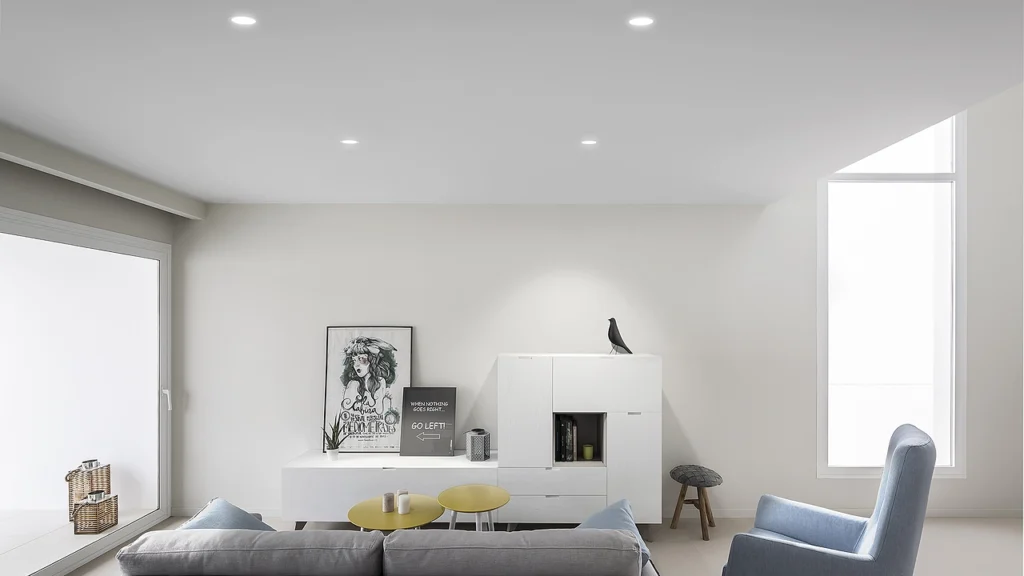
Gypsum LED Downlights — The Contemporary Lighting Option
This is the technical reference for LED downlights used in gypsum ceilings. Covers LED chips, drivers, heatsinks, UGR glare ratings, CRI colour rendering, IP water resistance ratings, beam angles, and what to look for when buying. For a visual guide to all gypsum ceiling lighting options (downlights, cove lighting, tracks, profiles), see our Gypsum Ceiling Lighting Design Guide.Gypsum Ceiling Lighting in Kenya
Gypsum ceilings support multiple lighting approaches beyond just downlights — pocket cove lighting, magnetic tracks, 2-wire tracks, plaster-in profiles, and cornice cove lighting. Each creates a different effect, and most gypsum ceilings combine 2-3 approaches for a layered lighting design.
For a visual guide to all six gypsum lighting solutions with product recommendations and room-by-room advice, see our comprehensive design guide.
What to Look For in LED Downlights
LED Chip
The chip transforms electricity into light. Efficiency matters: a cheap chip produces 70lm/W, a quality one delivers 140lm/W — double the light for the same power. Chips last 20,000–50,000 hours at rated temperature. At 4 hours daily, that’s 13+ years. Go for BridgeLux, Philips, or Osram.Lumens & Wattage
Lumens measure light output. A 60W incandescent produces ~800 lumens; a 6W LED matches it. Typical LED efficiency is 80–140lm/W.Heatsink
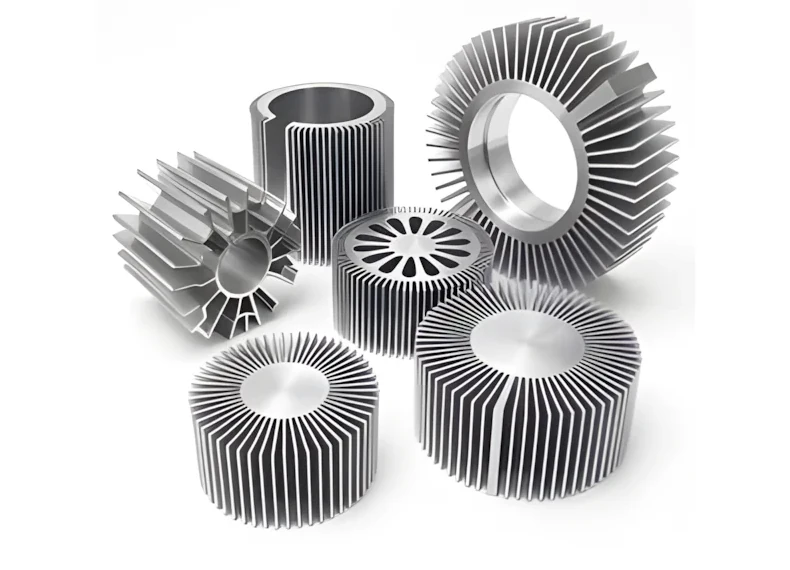
More wattage = more heat. A heatsink dissipates this into the air. For every 10°C temperature increase, LED lifespan drops 30–50%. A larger, heavier heatsink = longer-lasting light.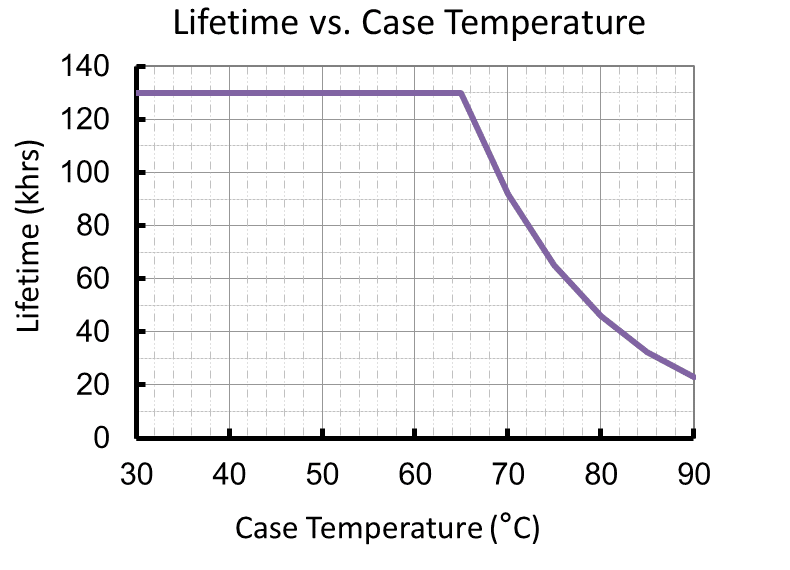
LED Driver
Converts 240V mains to LED-compatible DC voltage (24–72V). Good drivers regulate current, include surge protection, and may support dimming or smart home integration. Look for Lifud, Eaglerise, Philips, Osram, or TRIDONIC.UGR (Unified Glare Rating)
Measures discomfort glare from 10 (imperceptible) to 30 (high). Choose UGR <22 for living spaces. Narrower beam angles generally mean lower glare. Read more about UGR.CRI (Colour Rendering Index)
Measures colour accuracy under artificial light (0–100). Below 80 is poor; above 90 is excellent. Essential for retail, design work, and any space where colours matter. Modern LEDs routinely exceed CRI 80. Read more about CRI.IP Rating — Choosing the Right Protection Level
The Ingress Protection (IP) rating tells you how well a downlight is protected from solids (first digit) and liquids (second digit). Getting this right is critical — the wrong IP rating in a wet area is a safety hazard.IP20 — Dry Areas Only
No protection against moisture or dust ingress. Suitable for bedrooms, living rooms, offices, and hallways — anywhere that stays dry. The majority of downlights are IP20, and they’re perfectly adequate for most rooms in a Kenyan home. They tend to be slimmer and cheaper since they don’t need sealed housings.IP44 — Splash-Proof
Protected against water splashes from any direction. This is the minimum rating for bathrooms (Zones 1 and 2 — the area around the bath/shower and the area above 2.25m). Also suitable for kitchens where steam and occasional splashes occur. Most of our premium recessed downlights come in IP44 variants, including the Fixed Recessed Downlight (KSh 980) and the Aspect Anti-Glare (KSh 1,950).IP65 — Fully Sealed
Complete protection against dust ingress and low-pressure water jets from any direction. Required for shower zones (Zone 1 — directly above the bath/shower), outdoor covered areas (soffits, carports), and commercial kitchens with regular washdowns. Our IP65 Surface Downlight with Radar Sensor (KSh 3,200) is fully sealed and includes a built-in presence sensor — ideal for outdoor walkways or utility areas.CCT (Colour Temperature)
2700–3000K for cosy spaces, 4000K for balanced task lighting, 5000–6000K for clinical areas. Tricolour downlights let you switch. Read more about CCT.Beam Angle & Dimmability
Wide beam (60°) for ambient living-room light. Narrow beam (25°) for focused kitchen task light. All LEDs are dimmable, but the driver determines the experience — check compatibility before buying a separate dimmer.Purchase & Installation Checklist
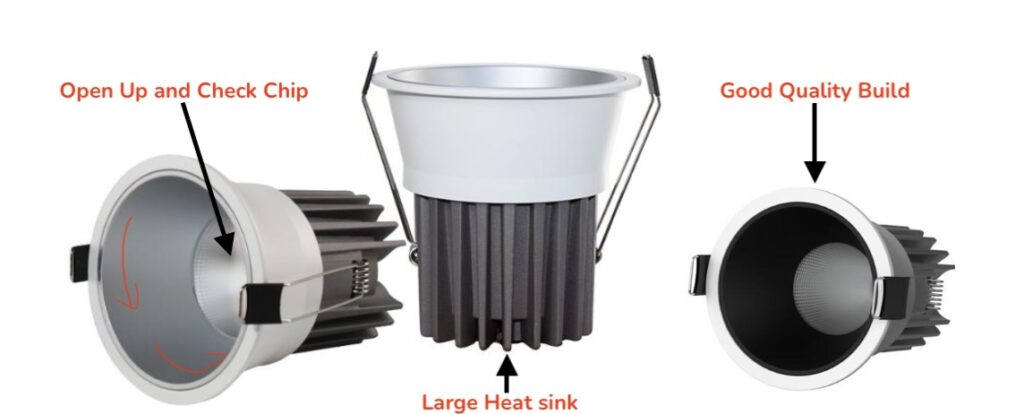
- LED Chip Quality — Check the manufacturer. BridgeLux, Philips, Osram. Aim for ~100lm/W efficiency and CRI >90.
- Driver Quality — Lifud, Eaglerise, Philips, TRIDONIC. Heavier = better heatsink = longer life.
- Housing — Larger heatsink = better cooling. Cheap, lightweight housings are a red flag.
- Spacing — 1.2–1.5m apart for general lighting. Closer for task areas.
- Headroom — Space above the fixture is critical for heat dissipation.
- Glare — Deep-set optics, lower lumens per fixture, dimmable drivers. UGR <19 ideal.
Frequently Asked Questions
GU10 vs Integrated LED downlights — which should I choose?
GU10 fixtures separate the housing from the bulb, so you can swap bulbs anytime. However, GU10 bulbs max out at 5–7W because the small form factor has no proper heatsink — meaning you need more fixtures to light the same area. Integrated LED downlights go up to 15–20W per fixture with large built-in heatsinks, so fewer fixtures cover the same room. The common argument for GU10 is serviceability — “I can replace the bulb when it dies.” But quality integrated LEDs last 30,000–50,000 hours (13+ years at 4 hours daily), so the replacement argument is largely moot. Choose GU10 for budget installs and rentals. Choose integrated for efficiency, fewer ceiling holes, and longer life.Do LED downlights need a voltage stabiliser?
LED downlights can last 10–15+ years, but only if they receive stable power. In Kenya, mains voltage fluctuations and surges — especially during KPLC load switching — stress LED drivers and dramatically shorten lifespan. A Sollatek AVS 30 Power Guard (KSh 4,899) protects your entire lighting circuit from surges, brownouts, and overvoltage. It’s a one-time investment that can save you from replacing dozens of downlights prematurely.Why would I want dimmable downlights?
Dimming isn’t just for ambiance — it’s practical. Set your hallway and bathroom downlights to 5–10% at night so you can navigate to the bathroom at 2am without blinding yourself. Use full brightness for cooking and cleaning, then dim to 30% for evening relaxation. A simple Triac dimmer switch (KSh 650) paired with a dimmable downlight gives you this range — no smart home setup required.